Common Questions for Parents
Navigating your child’s vision care can feel overwhelming, but understanding the foundations of myopia management is the first step toward a clearer future. Unlike standard vision correction, our focus is on slowing the progression of nearsightedness to preserve long-term ocular health.

What is myopia management and how is it different from regular glasses?
Standard glasses only compensate for blurred distance vision without addressing the underlying cause. Myopia management uses specialized therapies—such as Ortho-K, multifocal lenses, or Atropine—to slow the actual elongation of the eyeball, significantly lowering the lifetime risk of serious eye diseases linked to high myopia.
At what age should we start?
Early intervention is vital. Most management programs begin as soon as progression is detected, typically between ages 5 and 12. This window provides the greatest opportunity to intervene while the eye is still developing and most responsive to treatment.
How quickly will we see changes?
While visual clarity can improve almost immediately depending on the treatment type, the ultimate measure of success is the long-term stabilization of axial (eye) growth. We use precision monitoring to track results, with most families seeing a noticeable slowing in prescription changes within the first year.
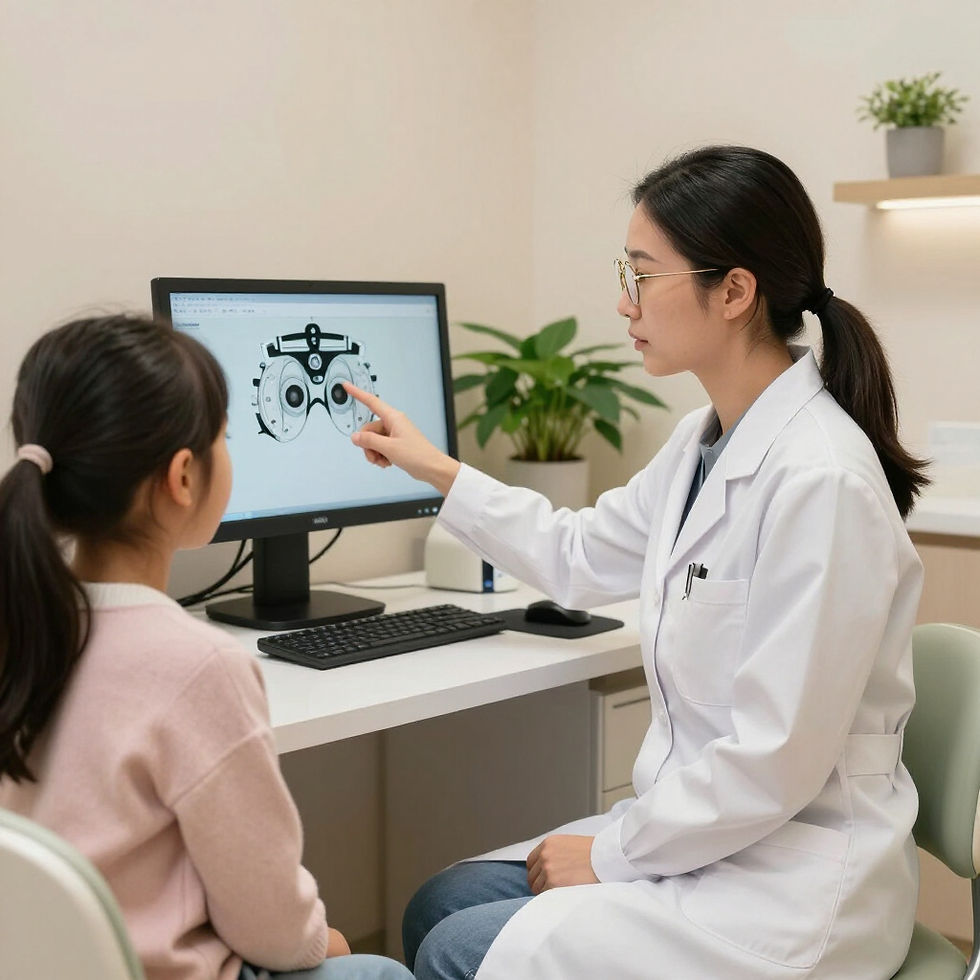
Treatment & Timelines
Your child's visual health is our priority. We offer personalized myopia management programs that evolve as they grow, ensuring long-term vision protection through clinically proven methods.
Which treatment is right for my child?
Treatment choice is highly individual. During our clinical evaluation, we consider your child’s eye health, age, maturity level, and daily activities—whether they are active in sports or prefer digital hobbies—to recommend the most effective path.
How long will they be in the program?
Myopia management is a multi-year commitment, typically lasting throughout the child's high-growth years. We usually monitor patients until vision stabilizes, which often occurs in the late teens or early twenties.
How is progress measured?
Our center uses advanced biometry to measure axial length—the physical growth of the eye—which is the most precise indicator of myopia progression and treatment success.
What if progression continues?
If progression occurs despite treatment, we can adjust drop concentrations, switch lens designs, or use combination therapies to maintain control and protect their future vision.
Safety & Monitoring: Your Child's Wellbeing First
Every treatment we prescribe is backed by global clinical evidence. We prioritize long-term eye health through precise fitting and rigorous follow-up care.

Is nighttime Ortho-K lens wear safe?
Orthokeratology is FDA-approved and has been used for decades. Complication risks are extremely low and similar to standard daytime contacts. We provide comprehensive hygiene training and monitor corneal health at every visit.

What side effects come with Atropine?
Our low-dose therapy (0.01%–0.05%) results in minimal side effects. While a small number of children may notice slight light sensitivity, we monitor this closely to ensure it doesn't interfere with school or sports.

Safety of myopia-control soft contacts?
Daily disposable lenses, like MiSight®, are highly safe and sterile. Since a fresh lens is used every day, the risk of surface contamination is minimized, making them perfect for active children and student-athletes.

Are specialized spectacle lenses safe?
Specialized myopia-control glasses (like D.I.M.S. technology) are completely non-invasive and carry no medical side effects. They are as safe as traditional glasses while effectively slowing eye-growth progression.
Ongoing Care & Support
Your child's visual development is a dynamic journey. Our comprehensive support system ensures that treatment remains effective, comfortable, and perfectly aligned with their active lifestyle, providing long-term preservation and peace of mind for parents.
Regular Monitoring
Direct Communication
Lifestyle Integration
Consistent follow-up visits every 6 months occur to track axial length changes precisely and adjust prescription strategies as your child grows, ensuring the most effective visual future.
We prioritize clear, reassuring communication. Our team is available between appointments to address questions about lens hygiene, vision changes, or travel preparations for your child's care plan.
Whether it involves sports, school routines, or travel, we offer practical guidance to help myopia management fit naturally into your child's active life, ensuring care never disrupts their potential.
Still have questions about your child's treatment or long-term care plan?